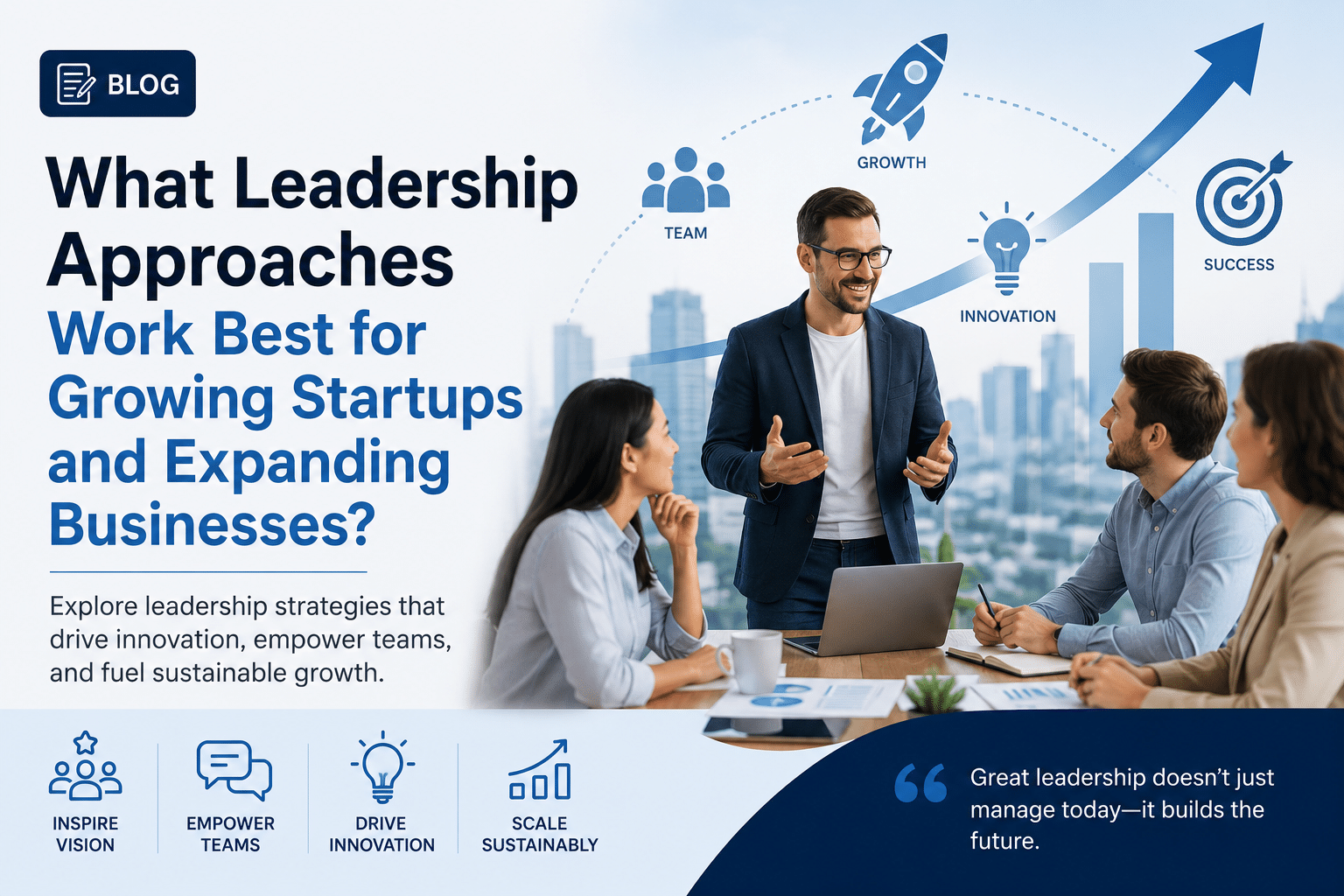
Growing a business is exciting, but it can also be challenging. What works for a small startup may not work as the company expands. This is where strong leadership becomes important.
Leaders must guide teams, build systems, and make smart decisions. They also need to adjust their style as the business grows. Using the right leadership approaches helps keep things organized and moving forward.
Why Scaling Leadership Strategies Matter
How Leadership Impacts Business Growth
Scaling leadership strategies plays a big role in how fast and how well a business grows. A clear direction helps teams stay focused and productive.
Concepts from Organizational Behavior show that strong leadership improves teamwork and performance. When leaders communicate well, employees understand their roles and goals better.
Challenges Leaders Face During Scaling
As a business grows, things become more complex. There are more people, more tasks, and more decisions to make.
Leaders often face issues like poor communication, slow decision-making, and team confusion. Without the right approach, growth can become difficult to manage.
Balancing Growth with Stability
Rapid growth can create stress on systems and teams. Leaders must balance expansion with stability.
This means building processes that support growth while keeping daily operations smooth.
Key Leadership Strategies for Scaling a Business
Setting a Clear Vision and Goals
A strong vision helps guide the company. It shows where the business is going and what success looks like.
Leaders should set simple and clear goals. These goals help teams stay aligned and focused on what matters most.
Building Scalable Systems and Processes
As a company grows, systems become more important than individual effort. Leaders must create processes that can handle increased demand.
This includes systems for hiring, sales, and customer service. Good systems make growth easier and more organized.
Making Data-Driven Decisions
Using data helps leaders make better choices. Instead of guessing, they rely on facts and numbers.
Fields like Business Analytics focus on using data to improve performance. This approach reduces risks and improves results.
Team Management During Business Growth
Hiring the Right People at the Right Time
Hiring is one of the most important tasks during growth. Leaders must find people who fit the company’s needs and culture.
Hiring too fast or too slow can create problems. A balanced approach works best.
Delegating Tasks Effectively
Leaders cannot do everything alone. Delegation allows them to focus on bigger goals.
Trusting team members with responsibilities helps improve efficiency and builds stronger teams.
Developing Future Leaders Within the Team
As the business grows, new leaders are needed. Training and mentoring employees helps prepare them for leadership roles.
This creates a strong leadership pipeline for the future.
Common Challenges in Scaling Leadership
Managing Rapid Growth Without Losing Control
Fast growth can lead to confusion and mistakes. Leaders must stay organized and keep track of progress.
Clear systems and regular check-ins help maintain control.
Communication Gaps in Larger Teams
As teams grow, communication can become harder. Messages may not reach everyone clearly.
Leaders should use simple communication methods and ensure everyone stays informed.
Maintaining Productivity and Efficiency
Growth can sometimes slow down productivity. New processes and roles may take time to adjust.
Leaders must monitor performance and make improvements when needed.
Maintaining Company Culture While Scaling
Keeping Core Values Strong
Company culture is what makes a business unique. Leaders must protect these values as the company grows.
Clear values help guide behavior and decision-making.
Encouraging Collaboration and Engagement
Teamwork is key to success. Leaders should create an environment where employees feel comfortable sharing ideas.
This improves creativity and problem-solving.
Adapting Culture to Growth Changes
As a business expands, culture may need to evolve. Leaders should adapt while keeping core values intact.
This helps maintain a positive and productive workplace.
Tools and Systems That Support Scaling
Automation and Workflow Tools
Automation helps reduce manual work. It allows teams to focus on more important tasks.
Simple tools can improve efficiency and save time.
Performance Tracking and Analytics
Tracking performance helps leaders understand what is working and what is not.
Metrics and reports provide useful insights for improvement.
Communication and Collaboration Platforms
Good communication tools keep teams connected. They make it easier to share updates and work together.
This is especially important for larger or remote teams.
Improving Decision-Making in Growth Stages
Using Data to Guide Strategy
Data helps leaders plan for the future. It shows trends and patterns that can guide decisions.
This leads to smarter strategies and better outcomes.
Managing Risks Effectively
Every decision involves some risk. Leaders must evaluate risks and plan ahead.
This reduces the chances of major problems.
Planning for Long-Term Success
Short-term growth is important, but long-term success matters more. Leaders should focus on building a stable and sustainable business.
Choosing the Right Leadership Approach
Adapting Leadership Styles to Growth Phases
Different stages of growth require different leadership styles. A startup may need hands-on leadership, while a larger company may need structured management.
Leaders should adjust their approach based on the situation.
Continuous Learning and Development
Leadership is not a one-time skill. It requires ongoing learning.
Concepts from Leadership Development highlight the importance of training and growth. Learning new skills helps leaders stay effective.
Building a Resilient Leadership Mindset
Growth comes with challenges. Leaders must stay strong and focused during difficult times.
A resilient mindset helps them overcome obstacles and keep moving forward.
Conclusion
Leadership plays a key role in the success of growing startups and expanding businesses. The right approach can make growth smooth and manageable.
By focusing on clear goals, strong teams, and effective systems, leaders can guide their businesses toward success. Using strategies from areas like Organizational Behavior and Business Analytics also helps improve decision-making and performance.
As your business grows, your leadership style should grow too. Stay flexible, keep learning, and focus on long-term success. With the right approach, you can build a strong and scalable business that continues to thrive.