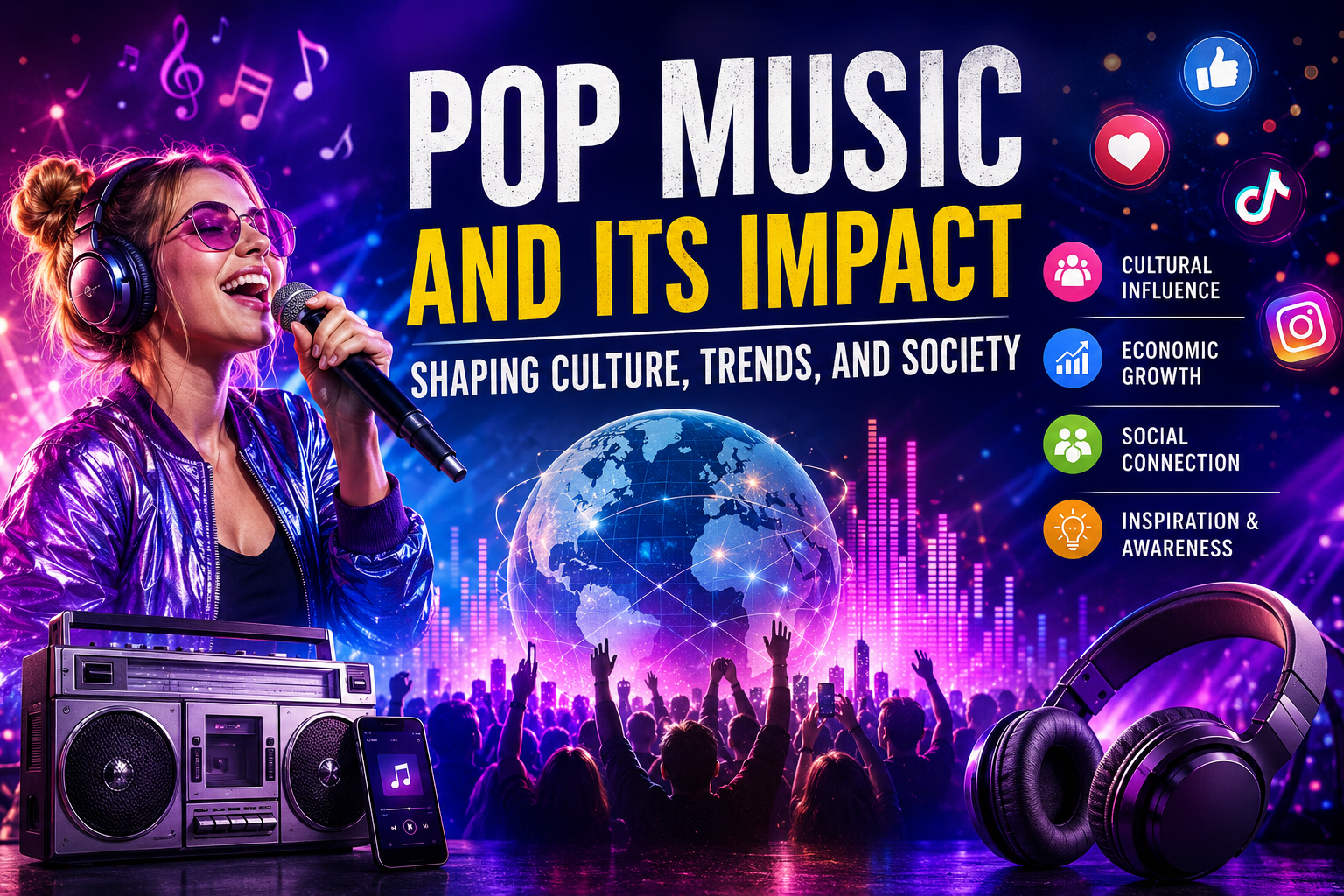
Pop music is one of the most influential forms of entertainment in the modern world. With its catchy melodies, relatable lyrics, and widespread appeal, pop music reaches millions of people across different countries and cultures. Over the years, it has evolved from simple radio hits into a global phenomenon that influences lifestyles, fashion, technology, and social movements. Understanding pop music and its impact helps reveal why it remains a dominant force in the entertainment industry.
What Is Pop Music?
Pop music, short for “popular music,” refers to music created for a broad audience. It is known for its memorable hooks, simple song structures, and commercial appeal. Unlike niche genres, pop music is designed to connect with listeners of all ages and backgrounds.
The genre continuously adapts by incorporating elements from rock, hip-hop, electronic dance music, R&B, and other musical styles. This flexibility has allowed pop music to remain relevant for decades.
The Cultural Influence of Pop Music
A Reflection of Society
Pop music often mirrors the values, emotions, and concerns of society. Songs frequently address themes such as love, relationships, personal growth, and social issues. As a result, listeners often find connections between popular songs and their own experiences.
Shaping Global Trends
Many global trends begin with popular songs and artists. Fashion styles, hairstyles, dance moves, and even language expressions often gain popularity through the influence of pop culture. Social media has further accelerated this process, allowing trends to spread worldwide within hours.
How Pop Music Impacts the Economy
The pop music industry generates billions of dollars annually through music sales, streaming platforms, concerts, merchandise, and sponsorship deals.
Growth of Streaming Services
Digital platforms have transformed how people consume music. Streaming services provide instant access to millions of songs, making it easier for artists to reach global audiences while creating new revenue opportunities.
Job Creation
The industry supports a wide range of careers, including:
- Musicians and singers
- Songwriters
- Producers
- Sound engineers
- Marketing professionals
- Event organizers
This economic contribution highlights the importance of pop music beyond entertainment.
READ THIS TOOO: Do the Driving Modes in Cadillac Lyriq Offer Different Ranges or Battery Usages?
The Social Impact of Pop Music
Bringing People Together
Music has the power to unite people regardless of nationality, language, or background. Pop songs often become shared experiences that connect fans around the world.
Raising Awareness
Many artists use their platforms to discuss important social topics. Through music, they can encourage conversations about equality, mental health, environmental issues, and community support.
Influence on Young Audiences
Young people are among the largest consumers of pop music. Artists often serve as role models, influencing attitudes, behavior, and aspirations. This influence can be both positive and negative, making responsible messaging important.
Technology and the Evolution of Pop Music
Advancements in technology have significantly changed the music industry. From digital recording tools to artificial intelligence and streaming algorithms, innovation continues to shape how music is created and distributed.
Artists can now produce high-quality music from home studios and connect directly with fans through social media platforms. This accessibility has created more opportunities for emerging talent to gain recognition.
The Future of Pop Music
Pop music continues to evolve as listener preferences change. Global collaborations, virtual concerts, and emerging technologies are creating new possibilities for artists and audiences alike.
The genre’s ability to adapt ensures that it will remain a powerful cultural force for years to come. Whether through entertainment, social influence, or economic impact, pop music continues to shape the world in meaningful ways.
Conclusion
Pop music and its impact extend far beyond catchy songs and chart success. It influences culture, drives economic growth, shapes social conversations, and connects people across the globe. As technology advances and new artists emerge, pop music will continue to evolve while maintaining its position as one of the world’s most influential forms of entertainment.
Frequently Asked Questions (FAQs)
1. Why is pop music so popular?
Pop music is popular because it features catchy melodies, relatable lyrics, and a broad appeal that attracts diverse audiences.
2. How does pop music influence culture?
Pop music influences culture through fashion trends, social movements, language, and lifestyle choices that often originate from popular artists and songs.
3. What role does technology play in pop music?
Technology helps artists create, distribute, and promote music more efficiently while allowing fans to access music instantly through digital platforms.
4. Can pop music affect social behavior?
Yes, pop music can influence attitudes, behaviors, and public discussions, especially among younger audiences who closely follow artists and trends.
5. What is the future of pop music?
The future of pop music includes increased global collaboration, virtual performances, advanced production technologies, and greater digital engagement with fans.