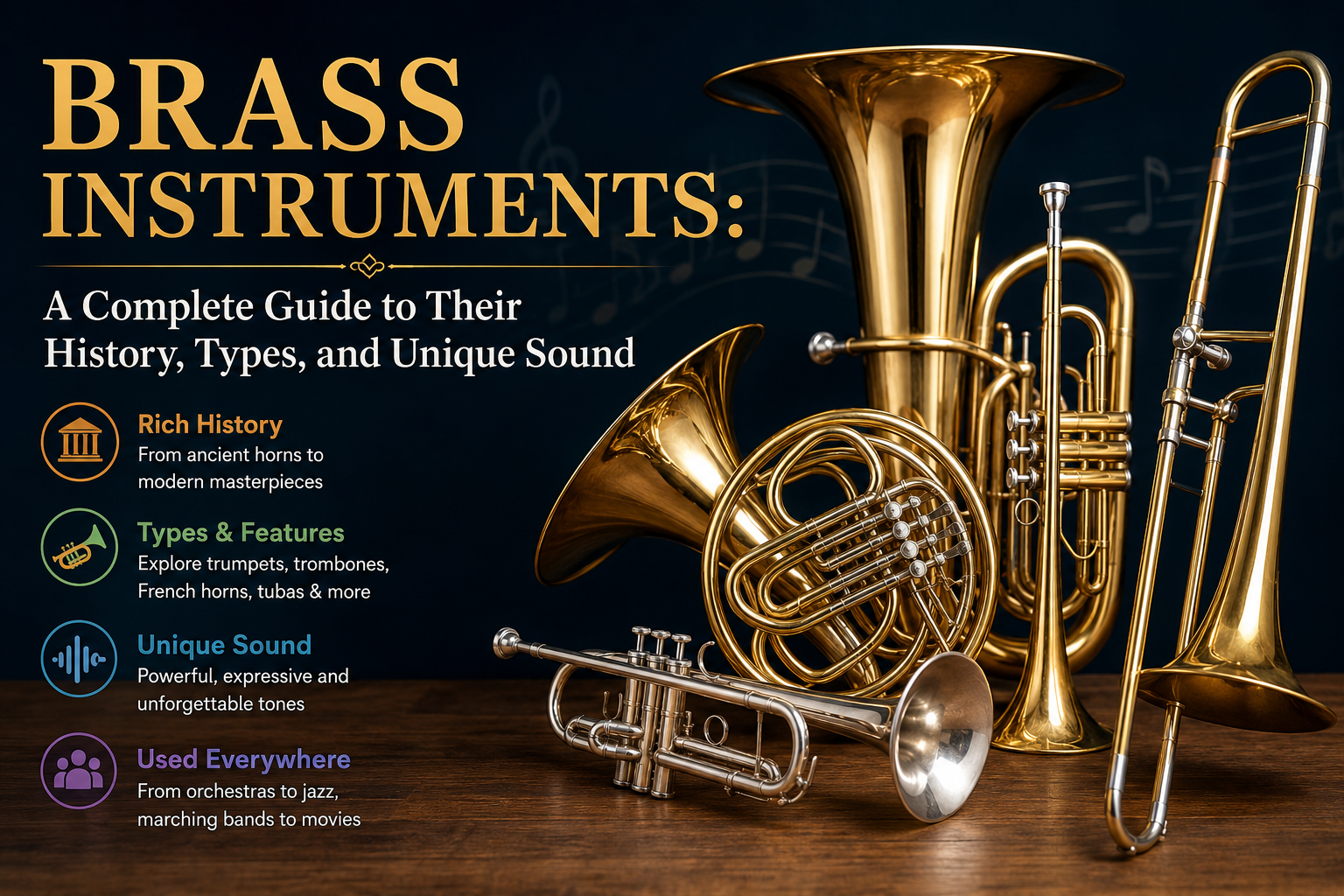
Brass instruments are among the most powerful and expressive instruments in the world of music. Known for their bold tones and impressive sound projection, they play an essential role in orchestras, marching bands, jazz ensembles, and concert bands. From classical symphonies to modern musical performances, brass instruments continue to captivate audiences with their rich and dynamic sound.
What Are Brass Instruments?
Brass instruments are wind instruments that produce sound through the vibration of the player’s lips against a mouthpiece. Despite their name, not all brass instruments are made entirely of brass. The defining characteristic is the method of sound production rather than the material used.
Players create different notes by changing the tension of their lips and using valves or slides to alter the length of the instrument’s tubing.
The History of Brass Instruments
The history of brass instruments dates back thousands of years. Early civilizations used horns made from animal horns, shells, and metals for communication, ceremonies, and military purposes.
As metalworking techniques improved, instrument makers developed more sophisticated designs. During the Renaissance and Baroque periods, brass instruments became increasingly common in formal music. The invention of valves in the 19th century revolutionized brass instruments, allowing musicians to play a wider range of notes with greater precision.
Types of Brass Instruments
Trumpet
The trumpet is one of the most recognizable brass instruments. It produces a bright and powerful sound that can easily stand out in an ensemble. Trumpets are widely used in classical, jazz, pop, and marching band music.
Trombone
The trombone is unique because it uses a slide instead of valves. This slide allows players to smoothly transition between notes, creating a distinctive and expressive sound.
French Horn
The French horn is known for its warm, rich, and mellow tone. It plays an important role in orchestras and is often used to add depth and emotion to musical compositions.
Tuba
The tuba is the largest and lowest-pitched brass instrument. It provides the foundational bass sound in many musical groups and helps support the overall harmony.
Euphonium
The euphonium produces a smooth and lyrical tone. It is commonly found in concert bands and brass ensembles where it often performs melodic passages.
How Brass Instruments Produce Sound
Lip Vibration and Airflow
Brass instruments create sound when players buzz their lips into the mouthpiece. The vibration travels through the instrument’s tubing, producing musical notes.
Valves and Slides
Most brass instruments use valves to change the pitch by redirecting air through additional tubing. Trombones use a slide mechanism that changes the tubing length manually.
Importance of Breath Control
Strong breath control is essential for brass players. Proper breathing techniques improve tone quality, volume, and endurance during performances.
Why Brass Instruments Are Important in Music
Brass instruments contribute energy, power, and emotion to musical performances. They can produce both gentle melodies and dramatic fanfares. Their versatility allows them to fit into many genres, including classical, jazz, military, film, and contemporary music.
Many famous compositions rely heavily on brass sections to create memorable musical moments and enhance the overall listening experience.
Conclusion
Brass instruments have played a vital role in music for centuries. Their distinctive sound, wide range of tones, and versatility make them indispensable in many musical settings. Whether it is the bright sound of a trumpet or the deep resonance of a tuba, brass instruments continue to inspire musicians and audiences around the world.
FAQs
1. What are the main brass instruments?
The main brass instruments are the trumpet, trombone, French horn, tuba, and euphonium.
2. Why are they called brass instruments?
They are called brass instruments because many are traditionally made of brass, although the playing method defines the category.
3. Are brass instruments difficult to learn?
They require practice, especially for breath control and embouchure development, but beginners can learn them successfully with regular training.
4. Which brass instrument is easiest for beginners?
Many beginners start with the trumpet or trombone because they are widely available and commonly taught.
5. Where are brass instruments used?
Brass instruments are used in orchestras, concert bands, jazz groups, marching bands, military bands, and popular music performances.