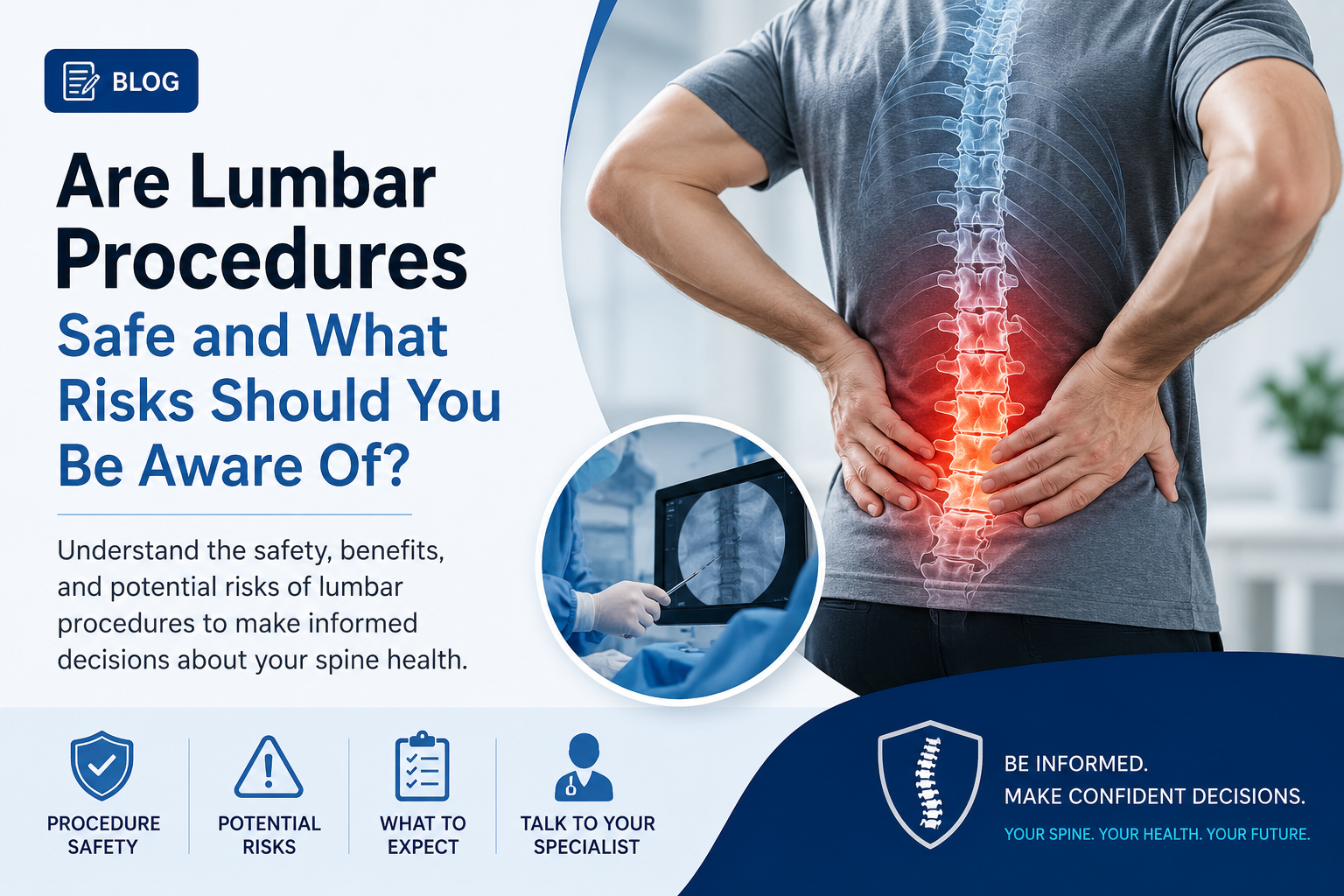
Lower back pain is very common. It can affect how you sit, walk, and even sleep. For some people, simple care like rest or exercise is not enough. That’s when doctors may suggest lumbar procedures.
The lumbar spine is the lower part of your back. It supports your body and helps you move. When problems happen in this area, they can cause pain, numbness, or weakness.
Many people ask an important question: Are lumbar procedures safe? The short answer is yes—most are safe when done by trained doctors. But like any medical treatment, there are risks you should understand.
What Are Lumbar Procedures?
Understanding the Lower Back (Lumbar Spine)
The lumbar spine is made up of bones, discs, nerves, and muscles. It helps you bend, twist, and carry weight.
Problems in this area can affect daily life. Pain may stay in the back or travel down the legs.
Why Procedures May Be Needed
When the spine is damaged or under pressure, it can cause serious symptoms. Doctors may suggest a procedure to fix the problem and reduce pain.
These procedures can be non-surgical or surgical, depending on the condition.
Common Conditions Treated with Lumbar Procedures
Herniated Disc and Nerve Compression
A Herniated Disc happens when a disc moves out of place. It can press on nearby nerves.
This pressure may cause pain, tingling, or weakness in the legs.
Spinal Stenosis and Chronic Lower Back Pain
Another common issue is Spinal Stenosis. This condition reduces space in the spine and puts pressure on nerves.
It can lead to long-term pain and difficulty walking.
Types of Lumbar Procedures Explained
Non-Surgical Options Like Injections
Not all lumbar procedures involve surgery. Some options include:
- Steroid injections
- Nerve blocks
- Physical therapy support
These help reduce pain and inflammation.
Surgical Procedures Such as Spinal Fusion and Discectomy
In more serious cases, surgery may be needed. Common procedures include:
- Spinal Fusion
- Discectomy
These procedures aim to remove pressure on nerves and stabilize the spine.
When Do Doctors Recommend Lumbar Procedures?
Symptoms That Should Not Be Ignored
Doctors may suggest a procedure if you have:
- Severe or ongoing back pain
- Pain that spreads to the legs
- Numbness or weakness
- Trouble standing or walking
These signs often point to nerve involvement.
When Conservative Treatments Fail
Most doctors try simple treatments first, such as rest, medication, and therapy.
If these do not help, then a lumbar procedure may be the next step.
How to Prepare for a Lumbar Procedure
Medical Tests and Evaluations
Before any procedure, doctors perform tests like:
- X-rays
- MRI scans
- Blood tests
These help identify the problem and plan treatment.
What Patients Should Expect Before Treatment
Patients may need to:
- Stop certain medications
- Arrange help at home
- Follow pre-surgery instructions
Being prepared can make the process smoother and safer.
What Happens During a Lumbar Procedure
Step-by-Step Overview of Common Techniques
The exact steps depend on the procedure. In general:
- The patient is given anesthesia
- The doctor makes an incision or performs an injection
- The problem area is treated
- The incision is closed if needed
Each step is done carefully to reduce risk.
Tools and Technology Used by Surgeons
Modern lumbar procedures use advanced tools like:
- Imaging systems
- Small surgical instruments
- Precision-guided techniques
These tools improve safety and accuracy.
Recovery and Healing After Lumbar Procedures
Hospital Stay and Early Recovery
Recovery depends on the type of procedure. Some patients go home the same day, while others stay longer.
Doctors monitor pain, movement, and healing.
Physical Therapy and Long-Term Care
After the procedure, physical therapy is often needed. It helps:
- Strengthen muscles
- Improve movement
- Prevent future problems
Following care plans is key to good results.
Risks and Possible Complications
Common Side Effects
Most lumbar procedures are safe, but some side effects may occur:
- Pain or soreness
- Swelling
- Temporary stiffness
These usually improve over time.
Warning Signs That Need Medical Attention
Serious risks are rare but important to know. These include:
- Infection
- Bleeding
- Nerve damage
You should contact a doctor if you notice:
- Fever
- Severe pain
- Loss of movement or feeling
Quick care can prevent bigger problems.
Results and Long-Term Outcomes
Pain Relief and Improved Mobility
Many patients feel less pain after treatment. Movement often improves, making daily tasks easier.
Results depend on the condition and the type of procedure.
Returning to Daily Activities Safely
Most people can return to normal activities after recovery. However, heavy lifting and intense activity should be avoided until fully healed.
Taking care of your back helps maintain results.
Conclusion
So, are lumbar procedures safe? In most cases, yes. With modern tools and skilled doctors, these treatments are safer and more effective than ever.
Still, it’s important to understand the risks. Every procedure has possible side effects, even if they are rare.
If you are dealing with long-term back pain, talk to a doctor. They can guide you toward the best treatment for your needs. With the right care, you can reduce pain, improve movement, and enjoy a better quality of life.